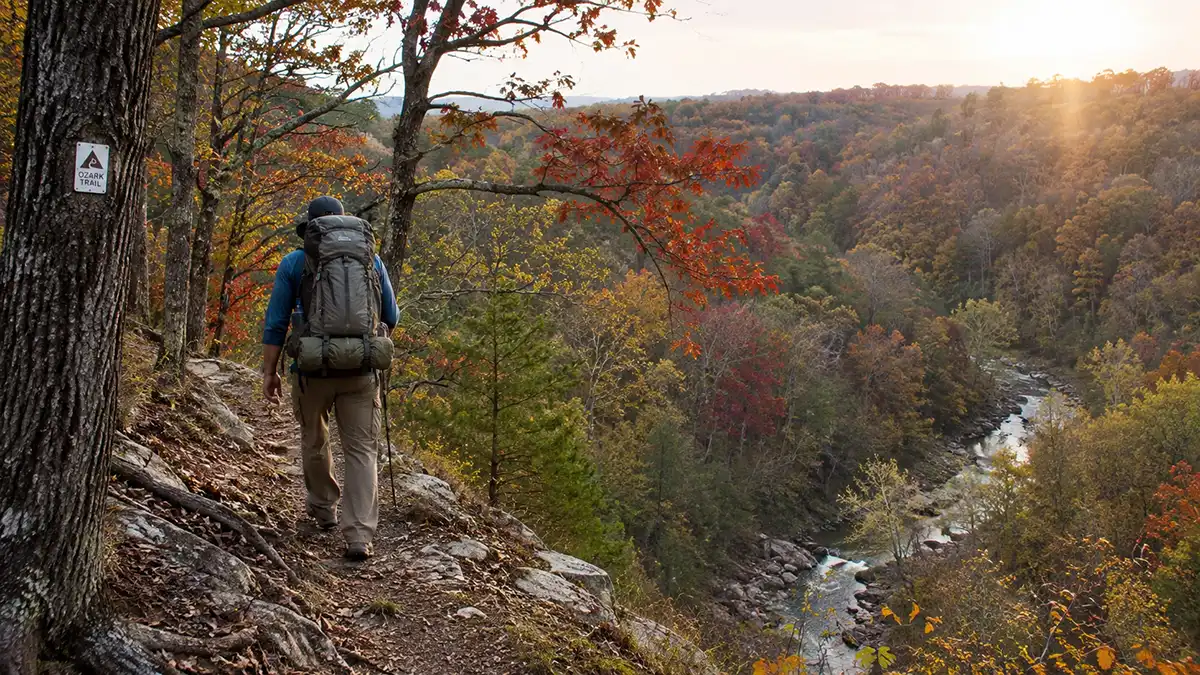
Backpacking the Ozark Trail: A Beginner's Guide
Winding through the rugged hills and hollows of southern Missouri, the Ozark Trail is the state's premier long-distance path — hundreds of miles of forested ridges, clear streams, and quiet backcountry. You don't have to thru-hike it to fall in love with it; a weekend on one of its scenic sections is one of the best ways to experience wild Missouri. Here's how a beginner can get started.
What the Ozark Trail Is
The Ozark Trail (OT) is a growing network of connected sections stretching across the southern half of Missouri, with more than 350 miles open and more being built toward an eventual link with Arkansas's Ozark Highlands Trail. It passes through some of the state's most beautiful country — the St. Francois Mountains, clear Ozark streams, glades, and hardwood forest. Sections are marked and vary from gentle to genuinely rugged.
Pick a Beginner-Friendly Section
Rather than biting off too much, start with a well-known, scenic section for an overnight or a short weekend. Popular options let you set up a car shuttle or do an out-and-back so you control the distance. Aim for 5 to 8 miles a day your first time out, choose a section with reliable water, and check current trail conditions and any reroutes before you go. The Ozark Trail Association's maps and resources are invaluable for planning.
Essential Gear
You don't need everything at once, but a few things are non-negotiable for a safe, comfortable trip:
- A properly fitted backpack (40–60 liters for weekend trips).
- Sturdy, broken-in hiking boots or trail shoes.
- A water filter or purifier — Ozark streams are beautiful but must be treated.
- A sleeping bag and pad rated for the season, plus a lightweight tent or hammock.
- Map, compass or GPS, headlamp, first-aid kit, and rain gear.
Keep your pack as light as you reasonably can — it makes those Ozark climbs far more enjoyable.
Water, Weather, and Safety
Water is the biggest planning factor on the OT: some stretches have plentiful streams while others are dry, so know your sources and carry enough between them. Missouri weather swings fast — pack for rain and cooler nights even in summer, and watch for ticks and chiggers in the warm months by treating clothing and checking often. Tell someone your route and expected return, and be honest about your pace on the trail's rocky, rooty terrain.
Leave No Trace
The Ozark Trail stays wild because hikers care for it. Pack out all trash, camp on durable surfaces well away from water, use established fire rings where fires are allowed (and check for burn bans), and give the streams and springs room. A little stewardship keeps the OT beautiful for the next backpacker.
Start with a single scenic section, keep your first trip short and your pack light, and the Ozark Trail will show you a side of Missouri you can only reach on foot.
Links to Products Mentioned
Backpacking backpack (Osprey) — https://amzn.to/4vVG1of
Hiking boots — https://amzn.to/44LQ8kn
Water filter (Sawyer) — https://amzn.to/3Td8WXh
Backpacking sleeping bag — https://amzn.to/4wu5MNq
Missouri Great Outdoors is reader-supported. This post may contain affiliate links, and we may earn a small commission on qualifying purchases at no extra cost to you.