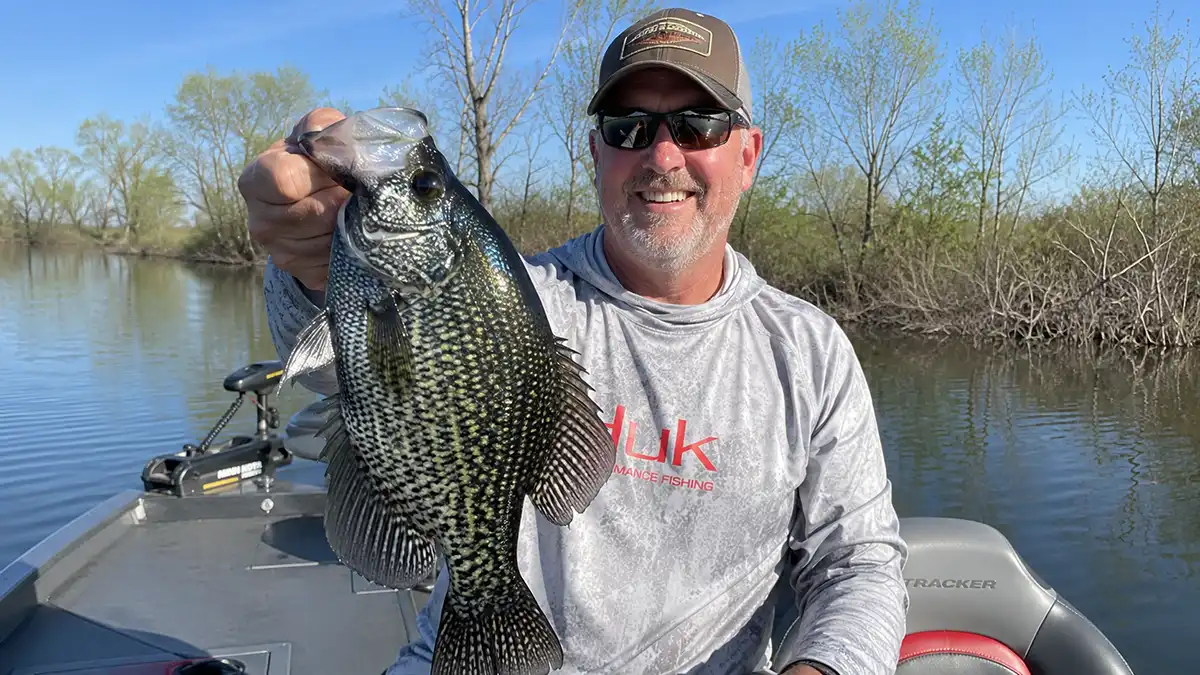
Spring Crappie Fishing on Truman Lake and Lake of the Ozarks
Ask a hundred Missouri anglers what their favorite fish is and a huge share of them will say crappie — and spring is when the obsession peaks. As the water warms into the mid-50s and 60s, crappie leave the deep brush they've held on all winter and push toward the banks to spawn. For a few glorious weeks they're shallow, aggressive, and stacked up thick. Two of the best places in the state to be during that window are Truman Lake and Lake of the Ozarks, both within easy reach of central Missouri.
Why These Two Lakes
Truman Lake is a crappie factory. It's a sprawling, timber-filled reservoir with endless standing timber, brushy flats and creek arms — exactly the kind of cover crappie love. Downstream, Lake of the Ozarks offers a different flavor: deeper, clearer, with docks, brush piles and rocky points that concentrate fish. Both produce big slabs, and both give you options when the weather swings, which it always does in a Missouri spring.
Timing the Spawn
The crappie spawn is driven by water temperature, not the calendar, but in a typical year the shallow bite really turns on from mid-April into early May. Watch the water temp: in the low 50s the fish are staging on the first drop-offs and deeper cover; once it climbs into the 58-to-65-degree range they move right up onto the banks — flooded bushes, brushy pockets, and the backs of coves — to lay eggs. That's when a kid with a bobber and a minnow can fill a bucket. After the spawn they pull back to deeper structure and the pattern shifts again.
How to Catch Them
Two approaches cover most spring situations. The first is a simple minnow under a slip bobber, dropped right into the brush and flooded cover where fish are spawning. It's deadly and it's how a lot of us learned. The second is casting or vertically jigging small soft-plastic jigs — a 1/16 or 1/32-ounce head with a curly-tail or tube body in white, chartreuse, or black-and-chartreuse. On stained Truman water, brighter colors shine; on clearer Ozark water, more natural shades often out-fish them. When you find one fish, work the spot thoroughly, because crappie school tight.
Reading the Cover
On Truman, target standing timber and brushy flats in the creek arms, especially anything near a channel edge that gives fish quick access to deep water. On Lake of the Ozarks, boat docks are gold — many have sunk brush piles under them, and crappie stack in that shade. Rocky points and the mouths of spawning coves are transition spots worth checking as the spawn winds down. A good electronics unit helps enormously for finding brush piles, but plenty of anglers still catch limits the old-fashioned way by hitting visible cover.
Keep What You'll Eat
Missouri sets length and daily limits on crappie, and some lakes — including parts of these systems — have specific regulations, so check the current statewide and lake-specific rules before you keep a mess of fish. A cooler of spring crappie fillets, dredged in cornmeal and fried, is one of the great rewards of the Missouri outdoors. Practice a little restraint on the biggest spawning females if you want the fishing to stay this good, and you'll be filling that cooler for years to come.
A Springtime Tradition
There's something about spring crappie fishing that pulls families out to the water together — it's forgiving enough for kids, exciting enough for veterans, and it comes right when everyone's itching to get outside after winter. Pick a warm, stable stretch of weather, head to Truman or the Ozarks, and go find the bushes. When the dogwoods are blooming, the crappie are usually biting.